Explaining the Gambler’s Fallacy
April 8, 2026 Tony ChristopherEver flipped a coin to heads five times in a row, and assumed the sixth flip must surely be tails? Welcome to the Gambler’s Fallacy. This well-studied and intriguing psychological phenomenon has been the bane of gamblers for over a century. Join us as we take a deep dive into what the Gambler’s Fallacy is, and some of the most notable examples.

Article contents:
About the Author:
Andy has over a decade of experience as a writer in the iGaming industry. During that time, he has developed a strong fascination with the psychology of gambling. An unapologetic history buff, Andy loves to dive deep into the history of casinos and gambling.
The Psychology of the Gambler’s Fallacy
The American Psychology Association’s Dictionary of Psychology defines the gambler’s fallacy as “the mistaken belief that one can predict the outcome of a chance event on the basis of the outcomes of past chance events” [1].
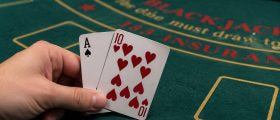
One of the most common examples of the fallacy in the gambling world is that of a hot streak. This is the belief that five consecutive strong blackjack hands will make a sixth more likely, for example. The gambler’s fallacy can be traced loosely to one specific brain function, pattern recognition.
While pattern spotting skills are an essential part of the human brain, tracing back to our days as hunters, according to Psychology Today [2]. However, the gambler’s fallacy sees the brain spot patterns that are not there, or assume a pattern in a series of random and unrelated events.
This is more likely to kick in after a loss, as riskloss sees a reduction in the amygdala, used by the brain in decision making. This is according to a brain mapping study published by the National Library of Medicine [3].
The Gambler’s Fallacy is not only present in the gambling world, but it is within games of chance that it is perhaps most prevalent. Perhaps never has the danger of the Gambler’s Fallacy had a more optimum example than that of the 1913 Monte Carlo Incident.
The Monte Carlo Incident

Arguably, the most famous example of the gambler’s fallacy and its potential impact came way back in 1913, in the gambling mecca of the Monte Carlo Casino.
The day started like any other, fabulously dressed gamblers making bets, some winning, some losing. But then, something amazing started to happen at the roulette table, the ball landed on a black segment once, twice, five times, ten times in a row.
At this point, every bettor had the same reaction, this must end now, the ball must land on red the next time. But it didn’t, the process repeated a further 16 times, to a total of 26 consecutive plays with the roulette wheel stopping on black.
Statistically, 26 balls in a row landing on black is immensely unlikely – a one in over 66 million chance, to be precise – but on the 25th spin, it’s just as likely you’ll land a 26th black as a first red.
But, in the heat of the moment the gambler’s fallacy kicked in, and by the end of this incredible run of spins, punters had lost millions. In fact, the losses continued as gamblers expected a matching run of reds to come to balance out the streak, but that did not happen.
This roulette streak had such a negative financial impact, according to Gizmodo [4], that the phenomenon is sometimes referred to as Monte Carlo Fallacy.
The Baseball Umpire’s Fallacy
In an article published in the Quarterly Journal of Economics in 2016 [5], researchers studied the impact of the gambler’s fallacy in various decision-making situations.
One of the most interesting finds in this study related to baseball umpires. It was shown that if two strikes in a row were called, umpires were over 1 full percentage point less likely to call a strike on the third pitch. This result was reached after observing around 1.5 million pitches from over 120 umpires.
This shows that even in situations where it is essential to ignore all previous data when making a decision, the human brain can still seem incapable of ignoring patterns completely.
Conclusion – Avoiding the Gambler’s Fallacy
So, how does one avoid the Gambler’s Fallacy? It’s easy to think ‘that will never happen to me’, but as shown above, it’s always possible. It’s important to always remember that random events have no correlation. Every time you make a bet or a wager, do not allow any unrelated events to affect your decision.
To avoid repeating the events of Monte Carlo, stick within your budget, only make bets you’re comfortable with, and remember, even if the roulette wheel has landed on black the last 25 times, it’s still just as likely to do it again.
References
- [1] Anon (2018) ‘Gambler’s Fallacy, APA Dictionary of Psychology Available at: https://dictionary.apa.org/gamblers-fallacy (Accessed 11.1.24)
- [2] Barkman, RC (2021) Why the Human Brain is So Good at Detecting Patterns’, Psychology Today Available at: https://www.psychologytoday.com/us/blog/singular-perspective/202105/why-the-human-brain-is-so-good-detecting-patterns (Accessed 12.1.24)
- [3] Xue G, Lu Z, Levin IP, Bechara A (2011) ‘An fmri study of risk-taking following wins and losses: Implications for the gambler’s fallacy, US National Library of Medicine Available at: https://www.ncbi.nlm.nih.gov/pmc/articles/PMC3429350/ (Accessed 11.1.24)
- [4] Inglis-Arkell E. (2014) ‘The night the gambler’s fallacy lost people millions, Gizmodo Available at: https://gizmodo.com/the-night-the-gamblers-fallacy-lost-people-millions-1496890660 (Accessed 12.1.24)
- [5] Chen DL, Moskowitz TJ, Shue K. (2016) ‘Decision Making Under the Gambler’s Fallacy: Evidence from Asylum Judges, Loan Officers, and Baseball Umpires’, The Quarterly Journal of Economics Available at: https://academic.oup.com/qje/article/131/3/1181/2590011?login=false (Accessed 11.1.24)