The Lies Gamblers Tell
June 5, 2026 Tony ChristopherUnderstanding cognitive biases like unreliable memory and the sunk-cost fallacy is key in recognizing a complex tapestry of the lies you tell yourself as a gambler. This journey into your psyche highlights how optimism and hindsight biases contribute to your self-deception.
Grasping these biases unravels the intricate narratives behind your decisions, leading you towards a more informed and responsible approach in the unpredictable world of gambling.
Unreliable Memory and Gambling
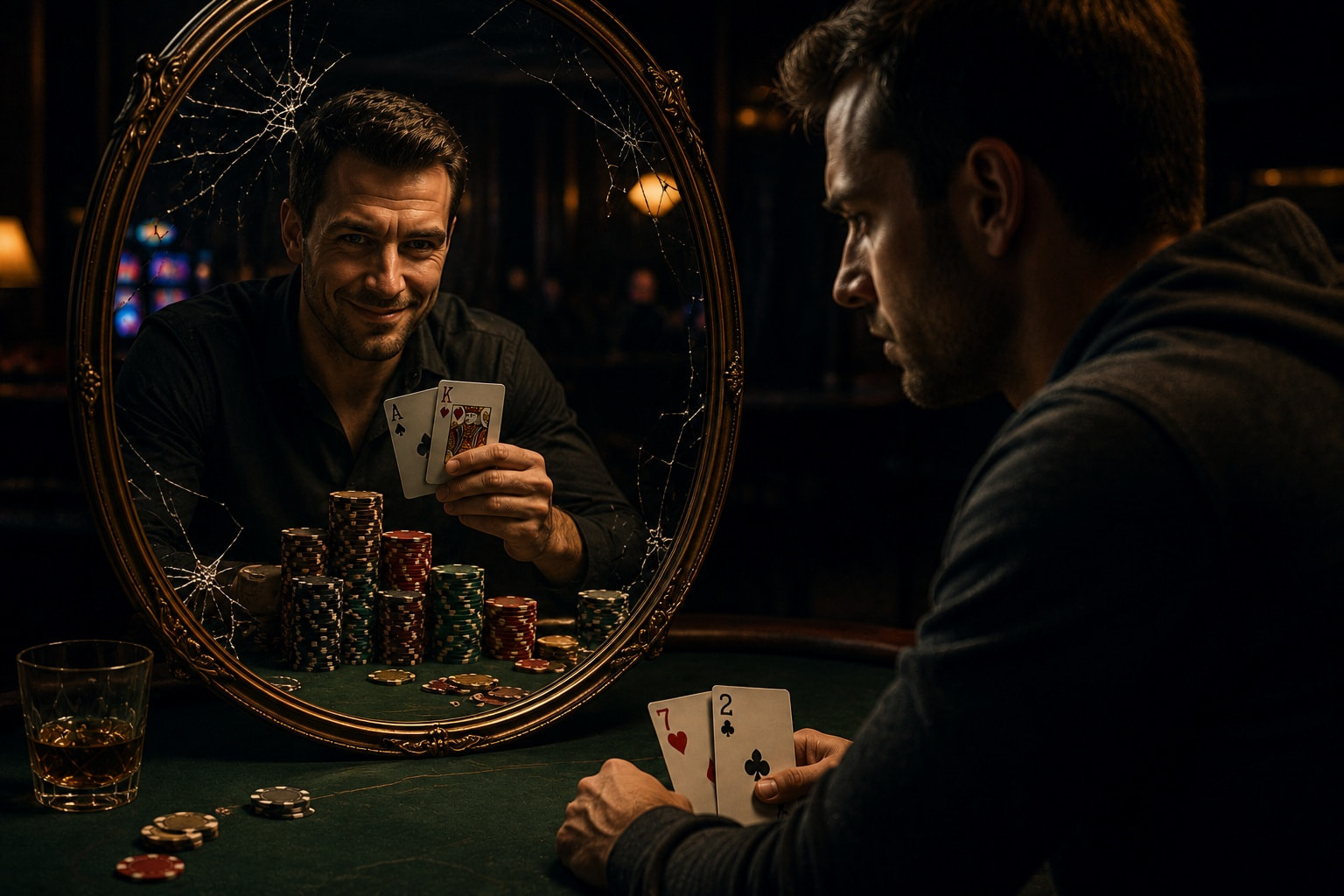
In the unpredictable gambling world, your memories often form the basis of your decisions, yet they are not always reliable. Unreliable memory, a subtle foe, can distort how you remember past gambling outcomes, leading you into uncharted territory. You might recall wins more vividly, creating an illusion of skill while conveniently forgetting losses.
This cognitive bias skews risk assessments, influencing how you plan future bets. As you navigate the uncertainties of gambling, the unreliability of memory plays a crucial role, affecting the balance you try to strike between luck and strategy. The challenge lies in distinguishing what happened from what you remember, a crucial skill in this complex environment.
You recall betting on the Kansas City Chiefs to win by more than 10 points in Super Bowl LIV [1] and winning. This memory leads you to falsely attribute the success to your skill in predicting game outcomes, not acknowledging the significant role of luck in this specific instance.
Sunk-Cost Fallacy in the World of Gambling
The sunk-cost fallacy[2] weaves a tale of self-deception. This cognitive bias entangles you in your lies, compelling you to keep betting despite mounting losses.
The deceptive thought, “I’ve already invested so much,” impairs your ability to make rational judgments, hindering you from cutting your losses and promoting a skewed mindset. As you delve deeper into the complex world of risk, the sunk-cost fallacy acts as a subtle architect of self-deception, shaping the fragile narratives based on your past decisions.
You lose several rounds at poker but continue to bet heavily in subsequent games, convinced that your initial investment of time and money must eventually lead to a win. This sunk-cost fallacy causes you to overlook the rational decision to stop, trapping you in a cycle of escalating losses.
Taking Credit and Blaming Others
In gambling, the self-serving bias emerges as a significant factor, shaping the lies you, the gambler, tell yourself. This cognitive bias makes you credit your successes to personal skill while attributing failures to external factors.
You may create a story where your wins testify to your skill, reinforcing an illusion of control. Conversely, losses are conveniently blamed on external circumstances, protecting your ego.
This self-serving bias distorts how you perceive your abilities and plays a crucial role in the complex web of self-deception, perpetuating the lies you tell yourself as you chase favorable outcomes.
You credit a big win in horse racing to your analysis of the horses and track conditions, reinforcing your belief in personal skill. However, when you lose in subsequent races, you blame the jockey or unexpected track conditions, deflecting responsibility and maintaining the illusion of control.
Confirmation Bias: Seeking Validation in Gambling
In the complex world of gambling, confirmation bias plays a pivotal role, significantly influencing your decision-making process[3]. This cognitive bias leads you to seek information that aligns with your beliefs, forming a distorted narrative and shaping the lies gamblers tell.
You might find yourself embracing data that supports your convictions, further reinforcing your existing biases and sometimes leading to riskier gambling behavior. As confirmation bias becomes more dominant in your psyche, your search for supporting evidence turns into a key driver, deepening the self-deception ingrained in the stories you construct around your betting choices.
Grasping the influence of confirmation bias is essential in unraveling the intricate web of lies that you weave in your mind as a gambler.
You, as a blackjack player, believe in lucky streaks and often recall and emphasize the times you won several hands in a row, reinforcing this belief. However, you tend to ignore instances that contradict this belief, such as consecutive losses, leading to riskier betting based on a flawed perception of ‘luck.’
Overestimating Predictive Abilities
In your journey through gambling, hindsight bias often sneaks in, altering your perception of past events. It acts as a deceptive storyteller, convincing you that you should have predicted the outcomes.

This distortion leads you to unwittingly overestimate your predictive abilities, fostering a false sense of confidence in your capacity to foresee gambling results. As you move on to the next bet, this altered view of the past is a misleading guide and a potential obstacle, adding unnecessary complexity.
Coming to terms with the uncertainties of gambling requires awareness of this cognitive bias, as it subtly influences your gambling decisions and perceptions.
You watch a major soccer match where an underdog team triumphs, and afterward, you claim you ‘knew all along’ they would win. This hindsight bias overlooks your earlier uncertainty, falsely inflating your belief in your ability to predict future matches, leading to overconfident bets based on this distorted perception of your predictive skills.
Deserving Success More Than Others
In gambling, optimism bias[4] often acts as a compelling storyteller, creating internal monologues that border on self-deception. This involves the subtle art of convincing oneself that success is inevitable and that one is more deserving of it than others—a deceptive form of optimism.
As you immerse yourself in gambling, this optimism bias can become a misleading guide, gently persuading you to believe that success is possible and a rightful reward for your efforts.
Recognizing and understanding this self-spun lie is crucial in getting through the complex web of deception that can form in your mindset as a gambler. This awareness helps you see that what might feel like optimism can sometimes be a misleading and unrealistic expectation of success.
After a few small wins, you start believing a major jackpot is imminent on the slot machines. This optimism bias convinces you that your continuous effort and time spent playing entitles you to a big win, more so than occasional players, overlooking the random nature of slot machine payouts.
Conclusion – Recognizing Lies for Future Profit
The lies gamblers tell are as much a part of the game as the cards and dice. Unraveling the complex tapestry of cognitive biases, from unreliable memories to optimistic whispers of success, exposes these self-spun narratives.
Grasping the impact of the sunk-cost fallacy, self-serving bias, and hindsight bias is vital for responsible and potentially profitable gambling. It’s a call to awareness, urging you to look past the alluring mirage of self-deception and embrace honesty amid risk.
In this journey, recognizing your own deceptions is the first step towards a more informed, mindful, and responsible approach to the unpredictable dance with chance and any hope of long-term profits.
References
- Chiefs’ Mahomes named Super Bowl MVP after comeback, Duluth News Tribune, February 02, 2020, Retrieved January 25, 2024.
- What is the sunk cost fallacy?, The Decision Lab, September 09, 2020, Retrieved January 25, 2024.
- Biased Evaluation and Persistence in Gambling, Thomas Gilovich, June 1983, Retrieved January 25, 2024.
- What Is Optimism Bias?, Kassiani Nikolopoulou, January 27, 2023, Retrieved January 25, 2024.